Failed Septic Trenches, Absorption Trenches and Septic System Failures in Queensland

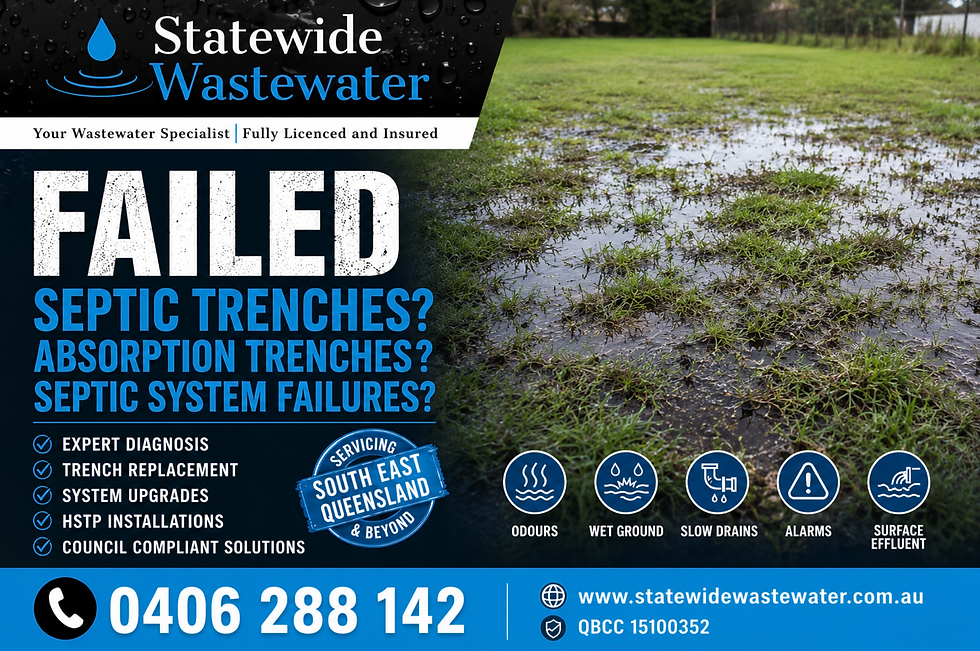
If you've noticed wet ground around your septic system, unpleasant odours, slow drains, or wastewater surfacing above ground, there's a good chance your septic trenches or absorption trenches may be failing.
At Statewide Wastewater, we specialise in diagnosing and repairing failed septic systems throughout South East Queensland and regional Queensland. Whether you're dealing with a failed septic trench, failed absorption trench, saturated disposal area or an ageing septic system that no longer meets current requirements, our team can provide a compliant and cost-effective solution.
What Causes Septic Trenches to Fail?
Septic trench failure can occur for several reasons, including:
Ageing trench infrastructure
Excessive hydraulic loading
Poor soil conditions
Tree root intrusion
Lack of maintenance
Increased household occupancy
Heavy rainfall and groundwater infiltration
Incorrect original system design
Over time, the soil surrounding absorption trenches can become clogged, reducing the soil's ability to absorb and treat wastewater effectively.
Signs of a Failed Septic System
Common indicators include:
Boggy Ground Around Trenches
One of the earliest signs is persistent wet areas surrounding the disposal field or trench area.
Sewage Odours
Unpleasant smells around the septic tank, trenches, or surrounding yard often indicate wastewater is not being adequately treated underground.
Slow Drains Throughout the Property
Multiple fixtures draining slowly may indicate the wastewater disposal system is no longer functioning correctly.
Surface Effluent
Wastewater appearing above ground is a serious sign that the trench system has failed and requires immediate attention.
Septic Alarms and System Warnings
For HSTP systems, recurring alarms often indicate disposal area performance issues.

Failed Absorption Trench Solutions
Every property is different, which is why there is no one-size-fits-all solution.
Statewide Wastewater can assist with:
Septic trench replacement
Absorption trench upgrades
Evapotranspiration systems
Land application area redesign
HSTP upgrades
Council approvals and compliance
Site assessments and wastewater design
Our team evaluates the existing system, site conditions, soil profile, and current wastewater demand before recommending the most appropriate solution.
Why Property Owners Across Queensland Choose Statewide Wastewater
Statewide Wastewater provides specialised wastewater services across Brisbane, Moreton Bay, Somerset, Scenic Rim, Sunshine Coast, Lockyer Valley, Toowoomba, South Burnett and surrounding regions.
We work with:
Residential properties
Acreage homes
Rural properties
Commercial facilities
Industrial sites
Mining and quarry operations
Developers and builders
Our focus is delivering practical wastewater solutions that remain compliant, environmentally responsible, and reliable for years to come.
Need Help With a Failed Septic System?
If your septic trenches, absorption trenches, or wastewater disposal area are showing signs of failure, contact Statewide Wastewater today.
Early intervention can often prevent larger repair costs and help restore your system before significant environmental or property damage occurs.
Statewide Wastewater – Queensland's specialists in septic systems, HSTPs, wastewater treatment systems, trench replacements, wastewater design, installation, servicing and compliance.


Comments