Bought a Rural Property? Here's Everything You Need to Know About Your Septic System or HSTP

If you've recently purchased a rural property, acreage, lifestyle block or home outside the sewer network, understanding your wastewater system is one of the most important things you can do.
Many new homeowners discover a concrete or plastic tank in the yard and have no idea what it is, how it works, or whether it needs servicing.
The short answer?
Yes, It probably does.
At Statewide Wastewater, we help hundreds of Queensland property owners understand, maintain, repair and replace their septic systems and Home Sewage Treatment Plants (HSTPs). This guide explains everything you need to know.
What Is the Tank Buried in My Yard?
If your home isn't connected to the town sewer network, all wastewater from your toilets, showers, sinks and laundry flows into an onsite wastewater treatment system.
This could be: eg.
✔ A traditional septic system
✔ A Home Sewage Treatment Plant (HSTP)
✔ An aerated wastewater treatment system (AWTS)
These systems safely collect and treat household wastewater before it is dispersed back into the ground through irrigation or land application areas.

What's the Difference Between a Septic System and an HSTP?
Septic Tank
A septic system separates solids from wastewater before partially treated water flows into absorption trenches.
These systems:
Have fewer moving parts
Are common on older rural properties
Still require inspections and pump-outs
Can fail if not maintained
Home Sewage Treatment Plant (HSTP)
An HSTP is a more advanced treatment system.
It uses:
Air pumps
Beneficial bacteria
Multiple treatment chambers
Disinfection
to produce a much higher quality treated effluent.
Many Queensland councils require these systems to be serviced regularly to remain compliant.
How Do I Know Which System I Have?
You may have an HSTP if you notice:
✅ An electrical control box
✅ Alarm lights
✅ Air blower
✅ Irrigation sprinklers
Older concrete tanks with no electrical equipment are often septic systems.
Still unsure?
Statewide Wastewater can identify your system during a site inspection.
Does My Wastewater System Need Servicing?
Yes.
One of the biggest misconceptions is that septic systems can simply be forgotten about.
Regular servicing helps:
✔ Prevent expensive repairs
✔ Remain council compliant
✔ Extend system life
✔ Reduce odours
✔ Improve treatment performance
✔ Protect your land application area
✔ Keep HSTPs compliant with council requirements
Ignoring maintenance often results in emergency breakdowns that are far more expensive than routine servicing.
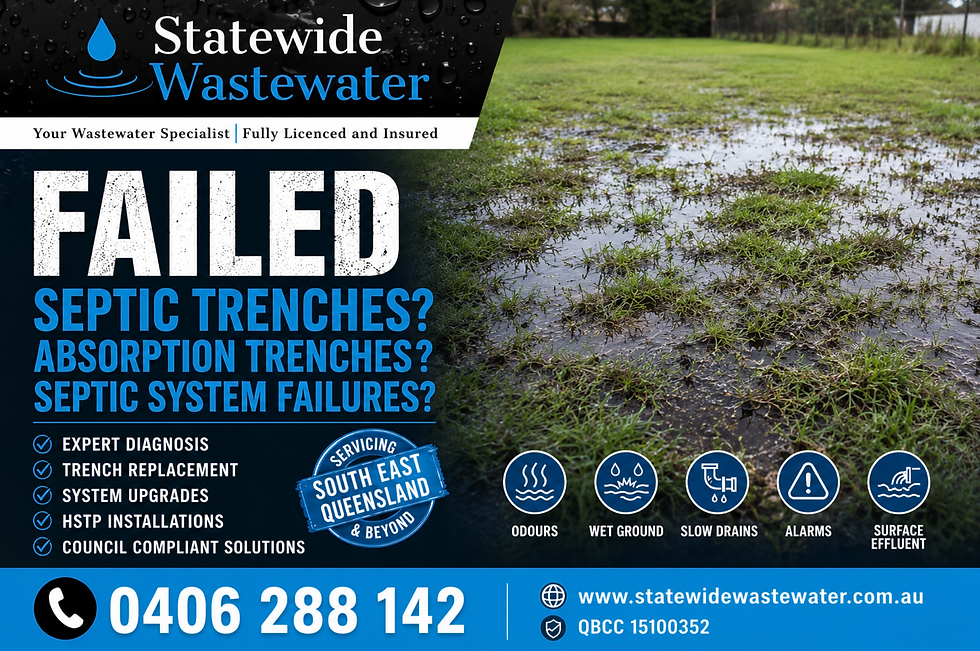
Warning Signs Your Septic System or HSTP Needs Attention
Call a wastewater specialist if you notice:
Alarm sounding
Bad smells
Slow drains
Toilets backing up
Wet ground
Overflowing tank
Pump running constantly
Sprinklers not operating correctly
Greener-than-normal grass around the disposal area
These are often early warning signs that can be fixed before major damage occurs.
How Often Should My HSTP Be Serviced?
Most HSTPs require professional servicing every three months, although the exact schedule depends on the manufacturer and local council requirements.
Routine servicing includes checking:
Pumps
Air blowers
Chlorinator
Treatment process
Sludge levels
Irrigation system
Alarms
Electrical components
Regular servicing helps ensure your system continues operating safely and efficiently.
What Should I Avoid Putting Into My Wastewater System?
To protect your system, avoid flushing or washing down:
Wet wipes
Nappies
Sanitary products
Cooking oils
Grease
Harsh chemicals
Paint
Solvents
Excessive bleach
These can damage the treatment process and lead to costly repairs.

Buying a Rural Property? Book a Wastewater Inspection
Many new property owners don't know:
When the system was last serviced
Whether it's operating correctly
If repairs are needed
If it's compliant
A professional inspection provides peace of mind before small issues become expensive ones.
Statewide Wastewater - Queensland's Wastewater Specialists
Statewide Wastewater provides professional:
HSTP servicing
Septic tank servicing
Wastewater inspections
Repairs
New HSTP installations
Septic system installations
Wastewater upgrades
Emergency call-outs
And much more
We proudly service residential, rural, commercial and lifestyle properties across Queensland.
Whether you've just purchased your first acreage or have owned your property for years, our experienced team can help keep your wastewater system operating safely and efficiently.
📞 Contact Statewide Wastewater today to book your wastewater inspection or servicing appointment.


Comments